The crafts of Kashmir
Kashmiri shawls
A shawl can be a way into Kashmir’s materials, skills and places. Start with the words on the label, then follow the making and the people behind them.
Start with the craft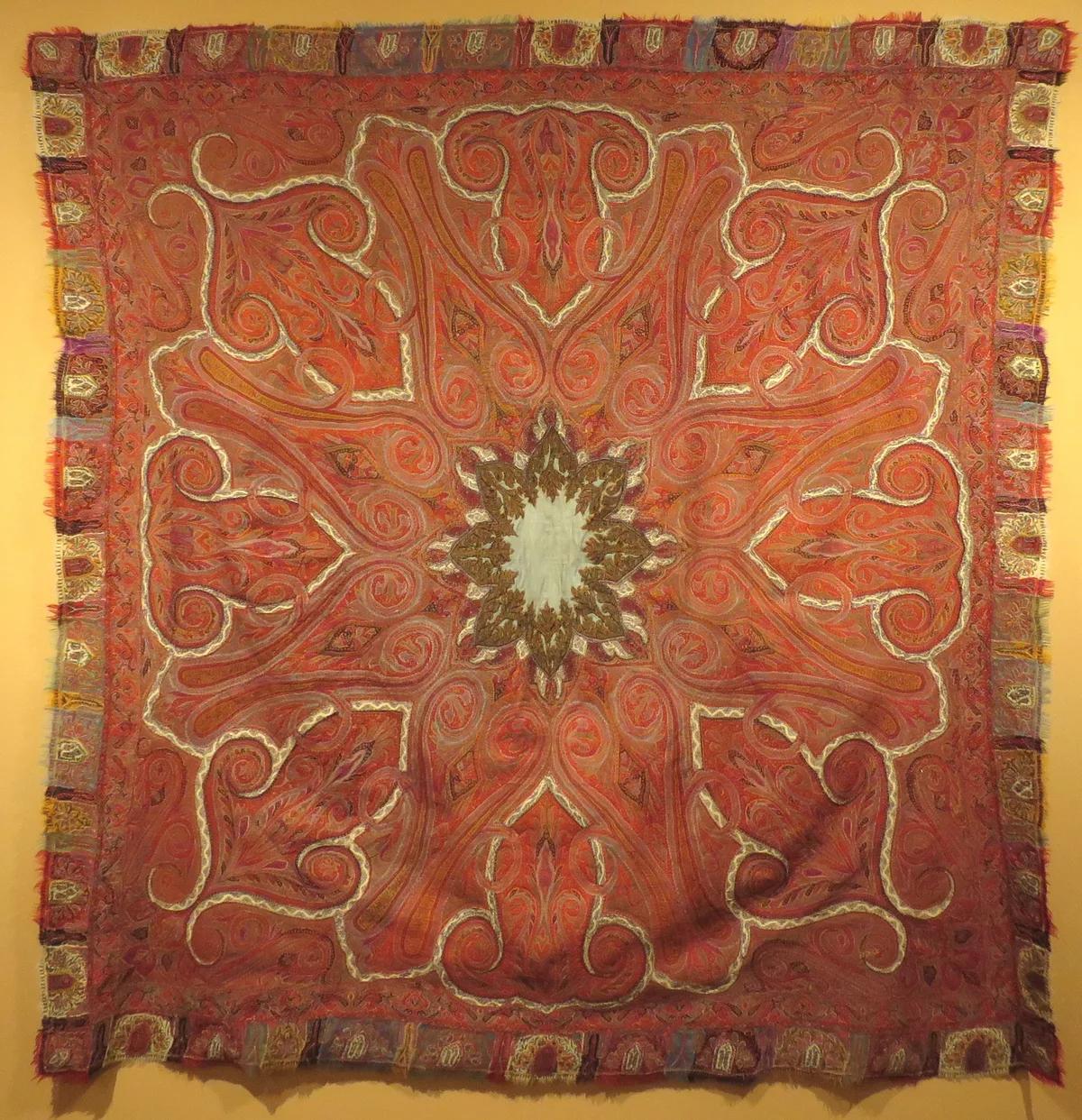
A mid-19th-century Kashmir shawl in the Honolulu Museum of Art, accession 3976.1.
Hiart / Wikimedia Commons · CC0 1.0 · Resized and converted to WebP.
Material, weaving and embroidery
A useful first step is to distinguish a shawl’s material from its decoration. The terms below answer different questions and can belong to the same piece.
The material
Pashmina
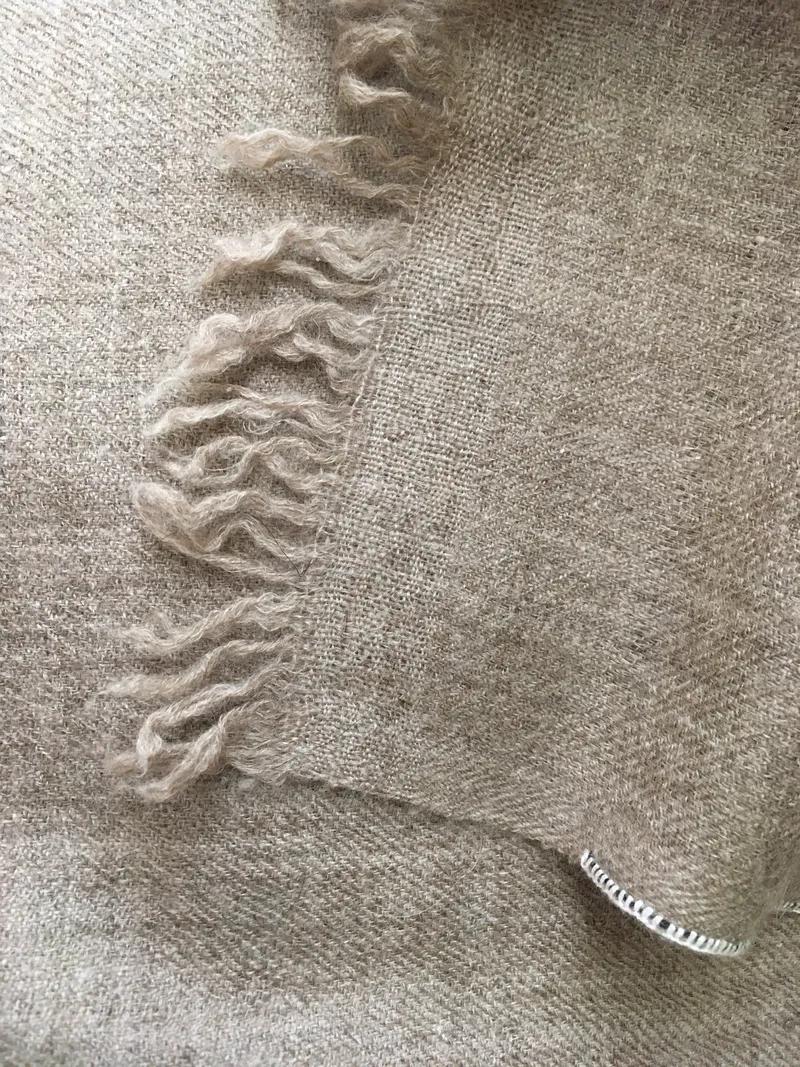
Handwoven pashmina from Srinagar.
AG (Alex.VG79) / Wikimedia Commons · CC BY-SA 4.0 · Resized and converted to WebP.
Begin with the fibre. Ladakh’s administration describes pashmina from Changthang goats being cleaned and dehaired to separate fine fibre from coarser material. Fibre processing is one part of a longer journey into yarn and cloth. Ask for the composition of the finished shawl, including any blend.
Source: Ladakh administration: processing pashmina fibreRead about PashminaThe weaving
Kani
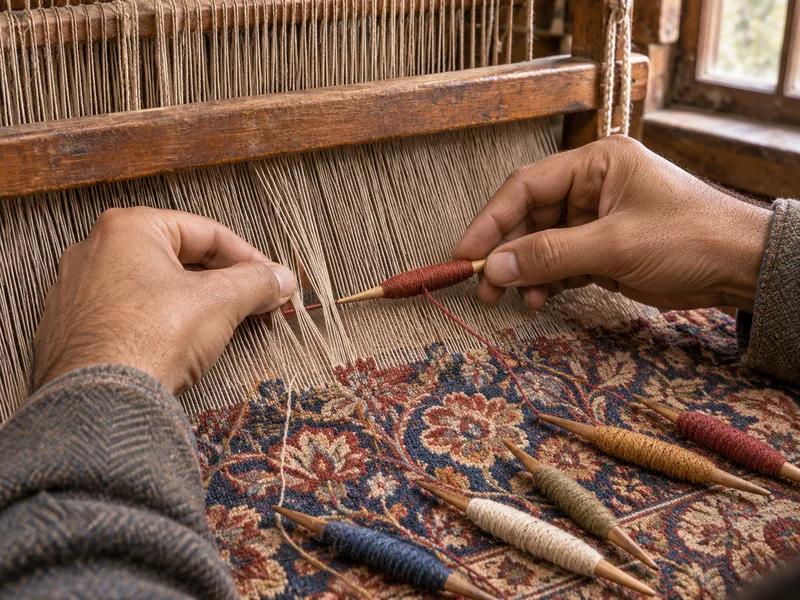
AI illustration of Kani weaving in progress.
Kani is a patterned weaving tradition using wooden bobbins. It helps describe how a design is formed in the cloth. Read the weaving description alongside the fibre label rather than treating the pattern name as a complete material description.
Source: Srinagar district: traditional handicrafts and buying guidanceRead about KaniThe needlework
Sozni
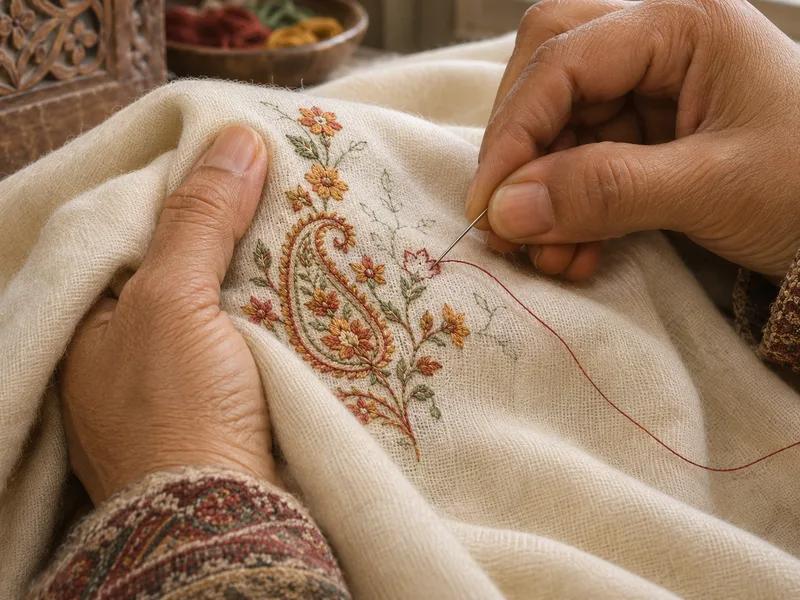
AI illustration of Sozni needlework in progress.
Sozni is fine needle embroidery used on shawls and garments. It describes decorative work on a fabric. Ask about both the underlying material and the embroidery when comparing two pieces.
Source: Srinagar district: traditional handicrafts and buying guidanceRead about SozniFollow the craft into its places
Kanihama is one starting point for a deeper Kani story. Budgam’s district administration identifies the village with Kani shawls and describes a local craft-commerce initiative. That connection gives us a specific place to explore alongside the technique.
This hub will grow through sourced accounts of making, local knowledge and clearly attributed voices. A future artisan profile should tell you who contributed, what was observed and where the information came from. Our first overview is based on the official references linked here; it does not represent a workshop visit or a certification service.
Source: Budgam district: Kanihama craft initiative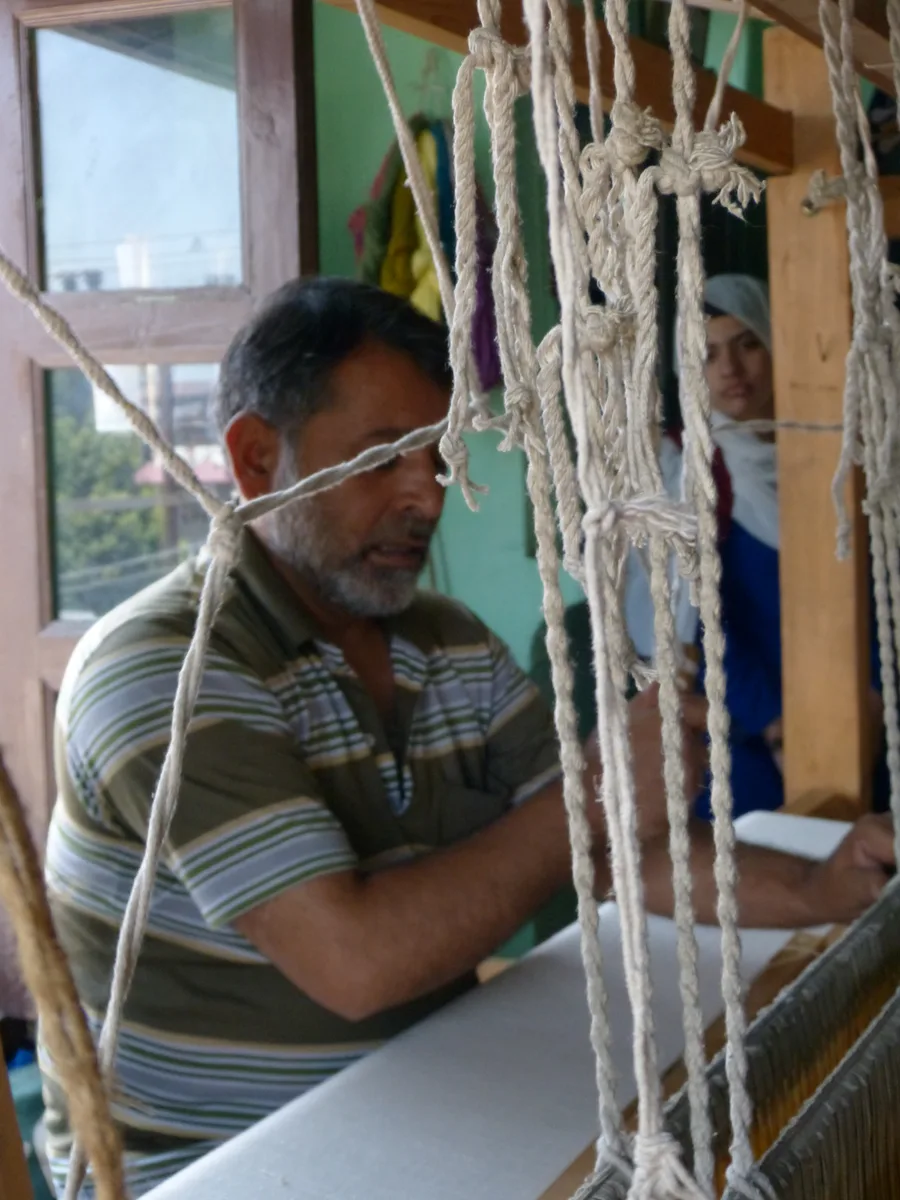
A shawl weaver at Bait-ul-Meeras, photographed in July 2024.
Zatara-Iqbal / Wikimedia Commons · CC BY-SA 4.0 · Resized and converted to WebP.
Questions worth taking to a seller
Srinagar’s official craft guidance recommends checking certification and asking for proper billing. Use those records as the start of a conversation about the particular piece you are considering.
- Ask for a written material description and any blend percentages.
- Ask which parts of the making and decoration are done by hand.
- If certification is claimed, ask for the evidence relating to that item.
- Keep the seller’s details, invoice and stated return conditions together.
Keep the care information with the shawl
Before choosing a piece, ask how its maker recommends cleaning and storing it. Keep any supplied care label with your purchase records. For an item you already own, use its specific instructions or ask a qualified textile-care professional before trying a cleaning method. A future care guide will need to account for the material and decoration together.
Shawl questions, answered
Are Pashmina, Kani and Sozni interchangeable names?
In this guide, they help distinguish material, patterned weaving and needle embroidery. Read those descriptions together when learning about an individual shawl.
Can I buy a shawl from KashmirSoul?
Our current catalogue does not include shawls. This page begins an editorial hub; any future shawl collection or commercial partnership will be introduced separately.
Does this guide authenticate a shawl?
No. It introduces useful terms and questions. Authentication of a particular item needs evidence about that item and, where appropriate, specialist assessment.
Sources behind this introduction
Official references consulted on 5 November 2026. These sources support this introduction, rather than certify any item offered by a seller.
Help us tell the next chapter
We want this hub to connect the cloth with its craft, its places and its people. If you have a shawl story, a correction or local knowledge to contribute, we would like to hear from you.