The shawls of Kashmir
Kani: the pattern takes shape at the loom
It is easy to begin with the colour of a shawl. Kani invites a different starting point: how does the pattern become part of the cloth? Following that question takes us from the finished design back to the loom.
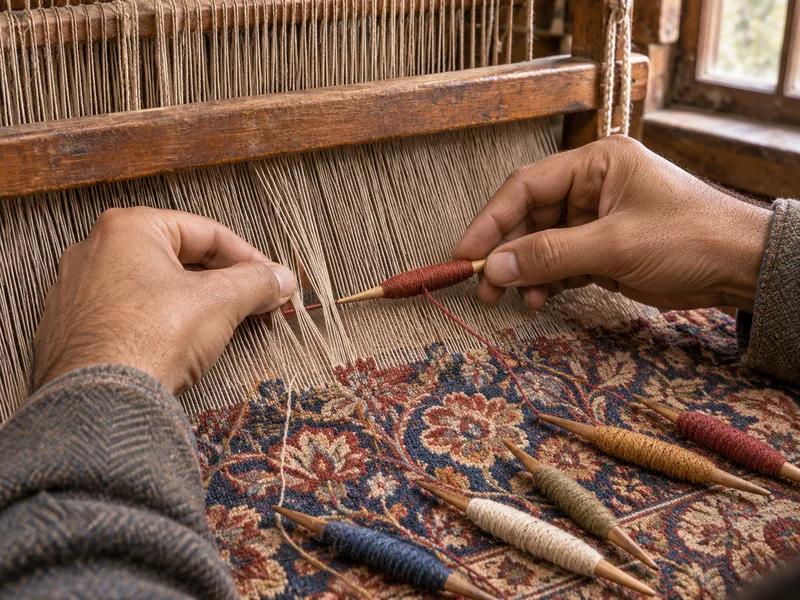
AI illustration of Kani weaving in progress.
A design formed through weaving
India Handloom Brand’s Kani overview describes small wooden tools, called Tojis, carrying coloured threads that interlock as the weft is worked. The important distinction for a first-time reader is that the patterned design is being formed through weaving.
Rather than starting with a finished pattern alone, follow the relationship between the yarn and the cloth. A useful account of making explains what the weaver is doing, which materials are involved and how the design develops.
Further reading: India Handloom Brand: Kani Pashmina Shawl (PDF)The motif and the method answer different questions
When comparing descriptions, separate the picture you see from the process used to create it. A motif name describes a design. A weaving claim describes how the cloth and pattern were constructed. Ask the seller to explain both instead of assuming that a familiar-looking pattern establishes the technique.
Keep the fibre question open too. Ask for the composition of the actual piece even when its title includes Kani. A useful description should help you understand the material, construction and decoration together, rather than make you infer everything from a single name.
Make room for the maker’s account
A conversation about a shawl can go beyond its front-facing photograph. Ask who wove it, whether the seller can describe the process and which details are documented. If close-up or reverse-side views are offered, use them to ask more specific questions, without treating a photograph as independent authentication.
A maker’s name, a workshop account and an item record are different kinds of information. Keep their sources clear. KashmirSoul’s hub introduces Kanihama as a place to explore in the wider Kani story; this article does not claim a workshop visit or a supplier relationship there.
Questions to take to a seller
Compare the answers for the individual shawls you are considering, and keep them with the invoice:
- What does the seller mean by Kani in this item’s description?
- What can they tell you about how its pattern was woven?
- What is its stated fibre composition and where was it made?
- Which claims are documented, and what care and return terms apply?
Common questions
Is Kani the name of the fibre?
Here, Kani describes the patterned weaving tradition. Ask separately what fibres are used in the particular shawl.
Can a photograph verify that a shawl is handwoven?
A photograph can help you ask more detailed questions, but it is not independent verification of the process. Ask for evidence relating to the actual piece.
Continue exploring
Back to the Shawls hubKashmirSoul’s shawls guides are editorial introductions. We do not currently sell or authenticate shawls.